ALIPH. Strategic Interventions in Crisis: Global Commitments to Cultural Preservation
Emerging frontiers in the protection of heritage from climate and conflict
In July 2025, the International Alliance for the Protection of Heritage in Conflict Areas (ALIPH) convened in Nicosia under the auspices of the Republic of Cyprus, a member state since 2023. The meeting, chaired by Bariza Khiari, President of the Foundation Board, marked a significant expansion of ALIPH’s operational framework, with the approval of 28 new projects, the launch of a dedicated programme for the rehabilitation of Syrian heritage, and a further funding package for Gaza. With these decisions, ALIPH has now allocated nearly USD 116 million to the preservation of cultural assets since its establishment in 2017.
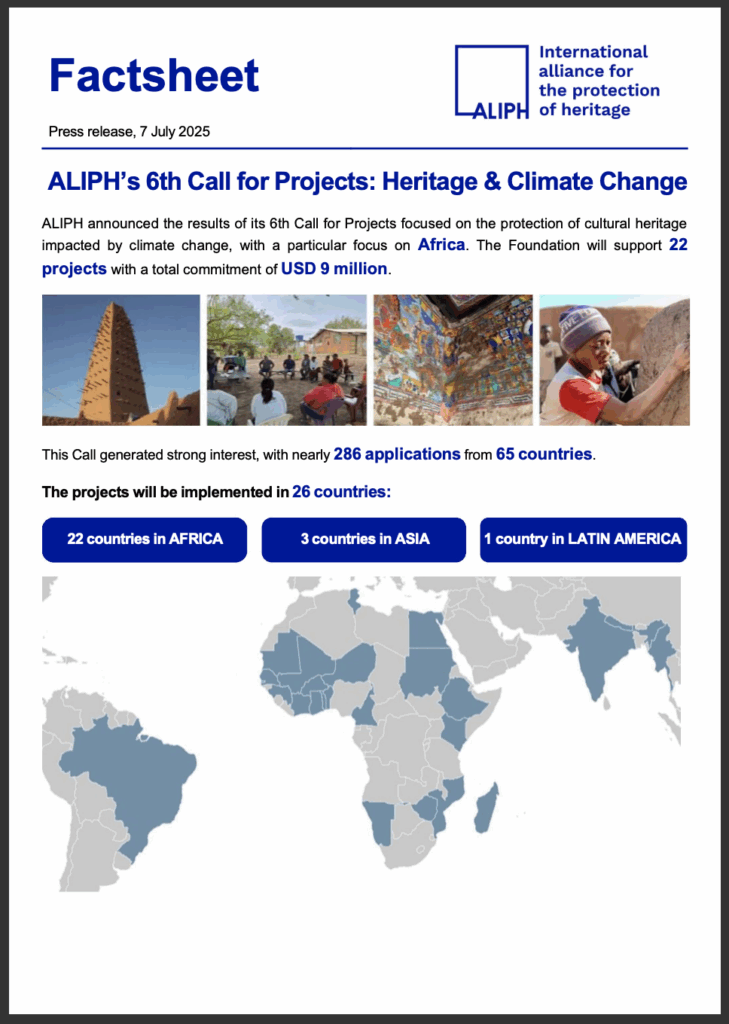
Of particular note is the unprecedented mobilisation of resources directed towards safeguarding cultural heritage in Africa endangered by the accelerating consequences of climate change. Of the 28 projects endorsed, 22 were selected through ALIPH’s sixth global call for proposals, focused exclusively on heritage sites imperilled by environmental pressures. These initiatives, spanning 26 countries—22 of which are located on the African continent—entail a financial commitment of USD 9 million.
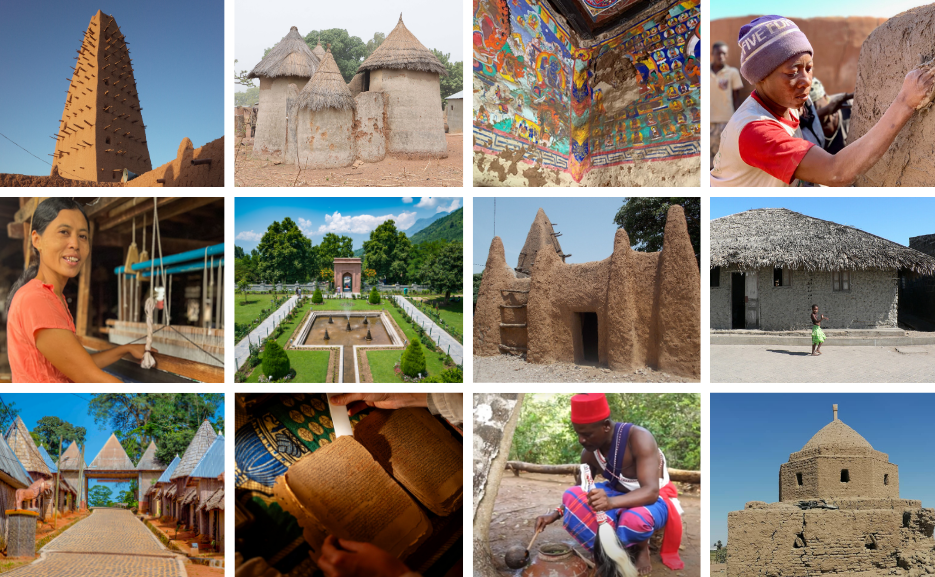
The projects encompass a broad typological and geographical diversity. Built heritage, especially earthen architectural traditions, will receive significant attention. Notably, conservation work will target vernacular structures of the Batammariba people in the Koutammakou region of Togo and Benin—an area inscribed on the UNESCO World Heritage List for its outstanding testimony to a living cultural tradition. Museums such as the Museum of the Sea in Gorée, Senegal, and manuscript repositories in Chinguetti, Mauritania, will benefit from improved conservation infrastructures. The initiative also includes support for intangible cultural expressions that enhance environmental resilience. Among these are traditional construction techniques on Mozambique Island, particularly the safeguarding of “macuti” architecture, and the protection of sacred forest systems in Kenya, integral to both cultural identity and ecological balance.
This sixth call for proposals elicited approximately 300 applications from 65 countries, underscoring a global recognition of the vulnerabilities posed by climatic transformations on cultural heritage. As part of its long-term strategic outlook, ALIPH approved a new programme aimed at building capacity among emerging African professionals engaged in the nexus of climate impact and heritage conservation. Launching in September 2025 with an initial envelope of USD 100,000, the scheme will fund research and field projects led by early-career scholars and conservators across the continent.
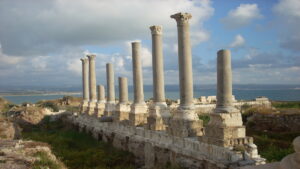
In parallel with climate-focused interventions, ALIPH has intensified efforts in zones afflicted by protracted conflict. A newly inaugurated programme to protect Syrian cultural heritage, endowed with USD 5 million over a two-year horizon, constitutes a substantial reinforcement of ongoing operations. Following a recent mission to Syria conducted by ALIPH’s Executive Director Valéry Freland, and coordinated with the Directorate General of Antiquities and Museums (DGAM), the initiative will focus on archaeological sites, religious buildings, historic quarters, and museum infrastructure. Particular attention will be devoted to Palmyra, whose partial destruction by armed groups in 2015 galvanised international resolve and ultimately contributed to the founding of ALIPH. Planned actions include the rehabilitation of the Palmyra Museum, reconstitution of its collections, and structural stabilisation of iconic ruins.
Since 2019, ALIPH has supported 18 heritage projects in Syria, with a cumulative investment of USD 3 million. These include the restoration of the Raqqa Museum and emergency interventions in Aleppo and the Crac des Chevaliers following the 2023 seismic event. ALIPH’s sustained engagement aims not merely at safeguarding physical heritage but at facilitating post-conflict recovery through cultural infrastructure, reinforcing cultural continuity, and enabling heritage-led socio-economic development.
The Foundation has also augmented its emergency response portfolio, reinforcing financial and logistical support in Ukraine, Gaza, Sudan, Lebanon, Yemen, and Myanmar. In Ukraine, a grant from the European Union (EUR 500,000) will bolster the safeguarding of artefacts relocated to temporary repositories in the country’s western regions. In Gaza, ALIPH has increased its funding from an initial USD 1 million to USD 1.5 million, with USD 600,000 already disbursed for site protection, training of local professionals, and emergency consolidation measures. In Sudan, documentation operations are underway at key institutions such as the National Museum in Khartoum and the Gazira Museum in Wad Madani, following the intensification of hostilities. A further USD 1.1 million has been approved for six new emergency initiatives.
ALIPH’s comprehensive strategy now extends across 54 countries and encompasses more than 550 discrete projects. The geographic scope and thematic diversity of these interventions attest to the evolving threats to cultural heritage—ranging from kinetic destruction during armed conflict to the slow erosion wrought by environmental degradation. Equally, the Foundation’s operational ethos remains rooted in subsidiarity, privileging collaboration with local actors, experts, and institutions. By supporting community-based custodians and emerging heritage professionals, ALIPH fosters conditions conducive to resilient, locally anchored heritage governance.
As articulated by Chair Bariza Khiari, ALIPH is “striving to provide even stronger support to communities and local stakeholders, the custodians of sustainable heritage protection.” The Foundation’s dual emphasis on rapid emergency response and long-term capacity building reflects a holistic understanding of cultural heritage as both material legacy and dynamic cultural practice. In this dual role—first responder and strategic enabler—ALIPH remains a pivotal institution in the global effort to defend heritage as a public good, even in the most challenging contexts.
[Source: ALIPH].

The Journal of Cultural Heritage Crime (JCHC), con sottotitolo L’Informazione per la Tutela del Patrimonio Culturale, è una testata giornalistica culturale, registrata presso il Tribunale di Roma con n. 108/2022 del 21/07/2022, e presso il CNR con ISSN 2785-7182. Si configura sul web come contenitore di approfondimento, il primo in Italia, in cui trovano spazio i fatti che quotidianamente vedono il nostro patrimonio culturale minacciato, violato e oggetto di crimini. I fatti sono riportati, attraverso un linguaggio semplice e accessibile a tutti, da una redazione composta da giornalisti e da professionisti del patrimonio culturale, esperti nella tutela. JCHC è informazione di servizio, promuove le attività di contrasto ai reati e sostiene quanti quotidianamente sono impegnati nella attività di tutela e valorizzazione del nostro patrimonio culturale.