


Introduction
By the end of 2024, southern Lebanon had already experienced a months-long Israeli ground invasion accompanied by heavy bombardment, resulting in casualties, injuries, and extensive material destruction. A fragile ceasefire was declared at the end of November 2024, but it was followed by numerous reported Israeli violations. Another wave of hostilities began in March 2026 and continues to this day. In addition to the significant number of civilian casualties, both periods have been marked by the targeting and destruction of the cultural heritage sites in southern Lebanon. Multiple locations of cultural and historical significance were either directly targeted or damaged as a result of attacks on their immediate surroundings.
Among the most notable monuments damaged or destroyed during the 2024 hostilities were the historic souks and mosques of Nabatiyeh, Chamma castle, the shrine of the Prophet Benjamin in the town of Muhaibib and the early 20th-century Church of Saint Georges in Dardghaya. Damage to some cultural heritage sites was also reported in Beqaa region of eastern Lebanon. In contrast, the 2026 attacks have been characterised by intense bombardment of the historic city of Tyre, while other cultural heritage sites have also sustained damage, most notably Beaufort Castle, Chamma Citadel, and the city of Nabatieh.
Throughout its history, Tyre’s cultural heritage has repeatedly been exposed to various forms of danger. This article analyses the impact of recent hostilities on cultural heritage sites in the city of Tyre, while also examining the city’s UNESCO World Heritage status and the history of the threats to its cultural heritage.
Tyre’s Cultural Heritage Sites
Tyre (or Sour/Sur) is a city in the southern Lebanon, located around 80 kilometres south of Beirut on the Mediterranean coast. It was inscribed on the UNESCO World Heritage List in 1984. The origins of this ancient city can be traced all the way back to the third millennium BC; some authors suggest around 2750 BC. The city is very rich in cultural heritage, with remains dating from the Phoenician, Roman, Byzantine, Crusader and Ottoman periods still visible or uncovered during archaeological excavations. The city’s main sites are Al-Bass, Al-Mina and the Old Town, where the remains of an ancient harbour were also discovered and interpreted underwater. Additionally, archaeological excavations at the Jal el-Bahr site in the north-east of the city have also revealed the area’s archaeological potential. Some other cultural heritage sites can be found in the surrounding area of the city of Tyre, including Ras el-Ain, Qana, Hiram’s tomb in Ain Baal, Bourj Al-Chemali, Al-Naqura and Chamaa.
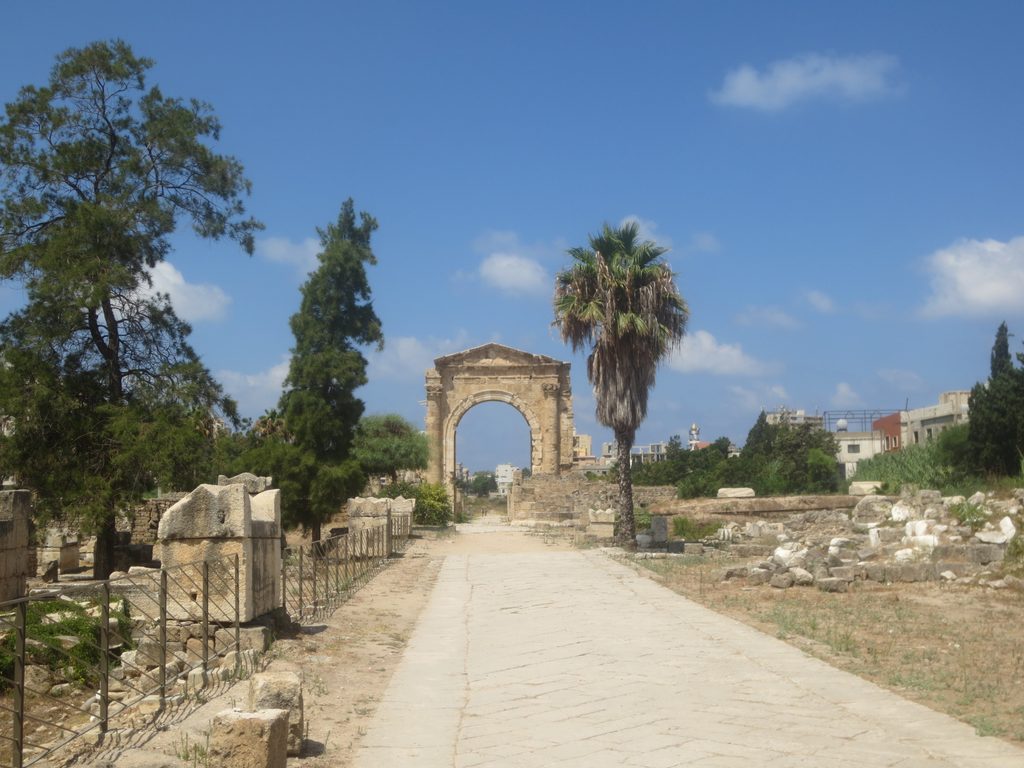
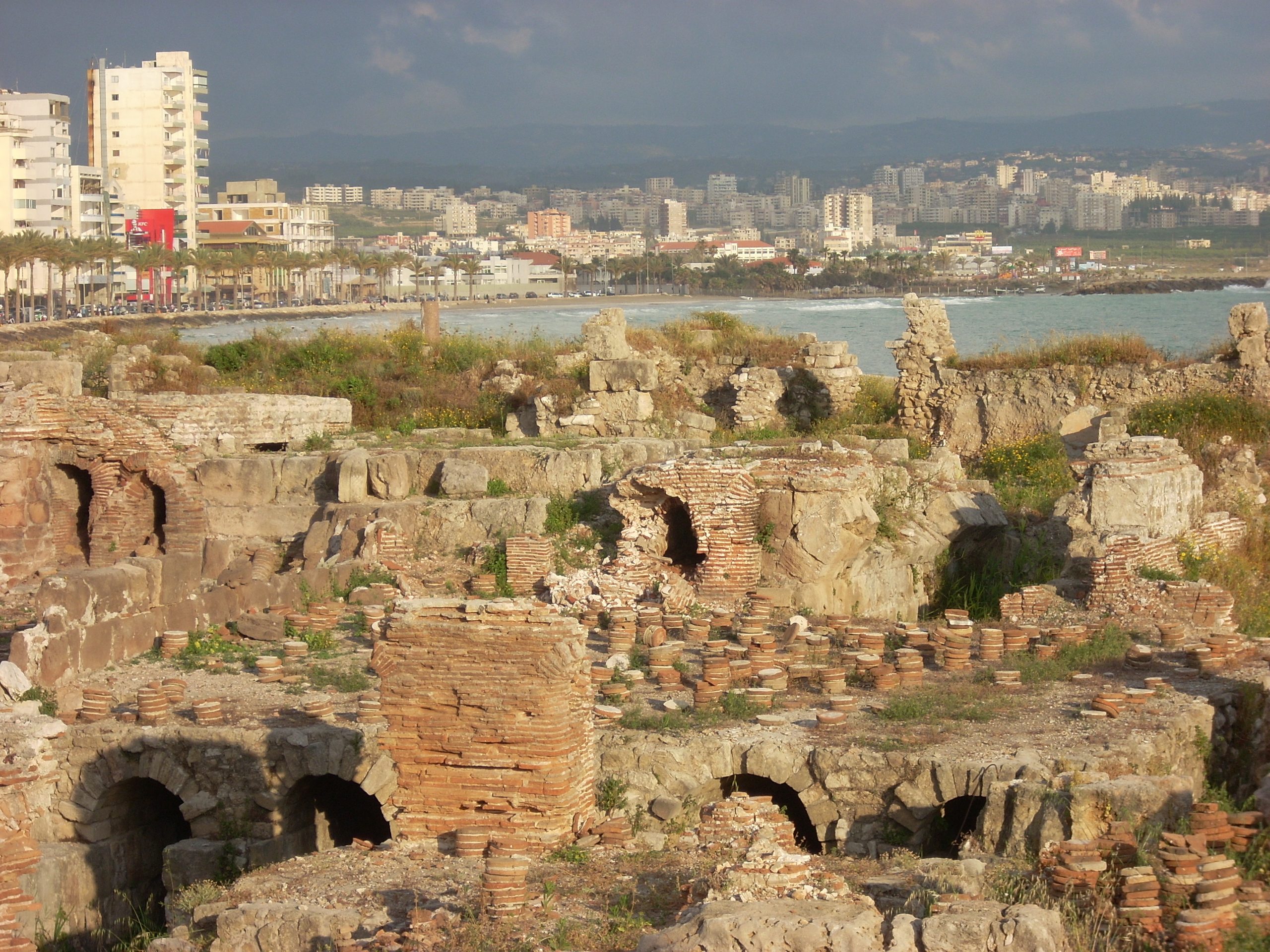
Of the sites mentioned above, the most known are Al-Bass and Al-Mina. Al-Bass is an archaeological site located in the eastern part of Tyre. It consists of a Roman necropolis (some elements of which can also be dated to the later Byzantine period), a monumental gate (or arch), and one of the largest Roman hippodromes to have been preserved. On the other hand, Al-Mina is an archaeological site located in the south of the city. It is where the city centre of Tyre was located in the Roman period. This interpretation is supported by the remains of the Roman public architecture can be found here, including a mosaic road, a Roman thermal complex, a rectangular arena, water reservoirs and a palestra. The site also had a second phase, after the massive earthquake of 551 AD, when industrial complexes for producing the purple dye and glass appeared.

UNESCO Status
Before the Lebanese Civil War, numerous archaeological excavations were carried out in Lebanon by both Lebanese and international teams. This was also the case in Tyre, where the pre-war archaeological excavations were conducted by Emir Maurice Chehab. However, the outbreak of the Lebanese Civil War in 1975 brought archaeological fieldwork to a halt and left many archaeological sites unsupervised and increasingly vulnerable to looting, destruction and uncontrolled construction all over the country. According to Seif (2015), the absence of central government control contributed to a dramatic increase in clandestine excavations and the looting of archaeological sites, particularly during the second half of the 1980s, when the practice spread over the country. While the looting and destruction of the National Museum in Beirut became a symbol of the vulnerability of Lebanese cultural heritage during the conflict, Seif identified two major hotspots of archaeological looting. The first one was Beqaa region in the eastern Lebanon, particularly the ancient city of Baalbek and the western Beqaa. As the second looting hotspot the southern Lebanon was identified, including the Tyre area. While Seif identifies local populations as the main perpetrators of looting, other relevant sources also point to the involvement of local militias and Israeli army. The scale of looting was often facilitated by the use of heavy machinery, including excavators and bulldozers, while in Tyre even underwater archaeological sites were targeted. The full extent of the damage in Tyre became apparent after 1990, when archaeologists discovered that clandestine excavators at the Al-Bass site had looted Phoenician cemetery and sold artefacts on the local market. Thus, Tyre was not exempt from the widespread processes of clandestine excavation, looting and destruction that severely affected Lebanon’s archaeological heritage during the Civil War.
Tyre was inscribed on the UNESCO World Heritage list in 1984 as Property no. 299. The inscription took place within the Lebanese Civil War and the broader historical and geopolitical context described above. In its recommendation for inscription, ICOMOS acknowledged the significant impact of the war on Tyre’s cultural heritage, while also equally highlighting the negative effects of urbanisation and land speculation. The inscription of Tyre in 1984 formed part of a broader inscription process, as the cultural heritage sites of Anjar, Baalbek, and Byblos were also inscribed on the UNESCO World Heritage List in the same year. According to the UNESCO website, Property No. 299 consists of two distinct sites: the “town site”, which encompasses roughly the Al-Mina area and the submerged structures, and the second site, consisting of the necropolis of Al-Bass. During my research, I was unable to identify the exact formal boundaries of these two sites. Tyre was inscribed on the World Heritage List under criteria (iii) and (vi) of the Operational Guidelines. This means that the sites were considered to possess Outstanding Universal Value and, under criterion (iii), to bear exceptional testimony to the Phoenician culture. Under criterion (vi), its significance is associated with important stages in human history, particualrly in its role in the transmission of the alphabet to Greece, as well as its mythological connection to the origin of the name of the European continent.
Tyre’s Cultural Heritage During Recent Hostilities
As stated in the introduction to this article, southern Lebanon has recently experienced two waves of hostilities, the first in 2024 and the second in 2026. At the time of writing, the second wave of hostilities is still ongoing to some extent, with military activities concentrated primarily in the southern Lebanese border areas. Tyre and its cultural heritage have been subjected to heavy bombardment, particularly in 2026. In its urgent alert, ICOMOS Lebanon identified five Israeli strikes that have had an impact on the Tyre’s World Heritage property.
Based on the descriptions of the locations of these strikes provided by ICOMOS Lebanon, they can be divided into two groups. The first group consists of strikes that occurred adjacent to the UNESCO World Heritage property. The strikes identified by ICOMOS Lebanon as adjacent to the property took place on 23 October 2024, 28 April 2026 and 27 May 2026. However, many additional strikes could potentially be included in this category, as the city of Tyre suffered frequent strikes during the peak of the hostilities. Although the strikes in this category did not directly hit the World Heritage property, they may nevertheless have had a significant impact on it, particularly through blast waves, ground vibrations, and other indirect effects resulting from nearby explosions.
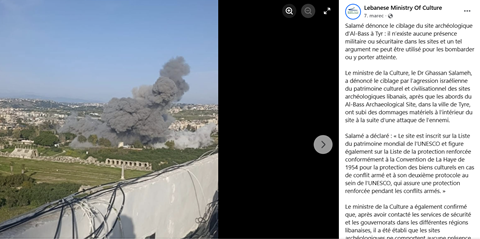
The second group consists of strikes that directly hit Tyre’s UNESCO World Heritage property. The direct strikes identified by ICOMOS Lebanon occurred on 6 March 2026 and 7 June 2026. On 6 March 2026, an Israeli strike hit within the buffer zone of the UNESCO World Heritage property at the Al-Bass site, in the vicinity of the Roman hippodrome. According to the social media post by Lebanese Ministry of Culture, the entrance to the site sustained material damage. Additionally, in an article published by The Art Newspaper on 10 March 2026, an unnamed ICOMOS Lebanon expert stated that the area near the Roman hippodrome may have sustained damage from the reverberations caused by the strike.

On 7 June 2026, a direct Israeli strike hit the entrance precinct of the Al-Mina archaeological site, causing direct damage to the site entrance, administration offices, warehouses, and archaeological remains within the UNESCO World Heritage property. In its urgent alert, ICOMOS Lebanon pointed out that, at the time, the full extent of the damage to the archaeological site was not known yet and that a comprehensive on-site assessment was required. However, it confirmed damage to the archaeological warehouses, which housed archaeological collections, artefacts, site documentation, and equipment from the Al-Mina site.
Further reports from the archaeological site by Al-Jazeera provide additional insight into the damage caused by the direct Israeli strike on 7 June 2026. In an Al-Jazeera report published on 21 June 2026, Adnan Istanbuli of the Directorate General of Antiquities (DGA) stated that the Israeli strike had caused massive damage, severely affecting the Roman columns, with some of their capitals falling off. The Roman road also sustained damage. Furthermore, the report showed that parts of the surrounding infrastructure had been blown onto the archaeological site as a result of the strike. In an Al-Jazeera report published on 10 July 2026, Nader Siklawi, the director of archaeological sites, demonstrated that the strike had also damaged artefacts awaiting processing, as well as the new museum building at the site.

UNESCO Actions During Recent Hostilities
UNESCO has been monitoring the situation during the recent hostilities in Lebanon since 2024. In November 2024, the organisation included Tyre’s cultural heritage sites, together with the nearby Ras al-Ain site on the International List of Cultural Property under Enhanced Protection. In 2026, the nearby sites of Qana and Qabr Hiram (Hiram’s tomb) were also added to the list. I have already discussed the concept of enhanced protection in a separate article for The Journal of Cultural Heritage Crime in December 2024; therefore, I will only briefly present the concept here.
The legal basis for the system of enhanced protection is the UNESCO Convention for the Protection of Cultural Property in the Event of Armed Conflict, also known as the 1954 Hague Convention, and its two Protocols. The concept of enhanced protection was introduced by the Second Protocol to the Convention in 1999. Cultural property under enhanced protection benefits from maximum immunity from attack and from being used, or having its immediate surroundings used, in support of military action. Such actions are defined as serious violations of the Second Protocol under Article 15. The Second Protocol also requires State Parties to establish such acts as criminal offences under their domestic law. Enhanced protection can therefore be understood both as an emergency measure when the provisions of the 1954 Hague Convention fail and as a tool for raising international awareness of cultural property endangered by armed conflict. According to UNESCO, cultural properties included in the enhanced protection system benefit from the technical and financial assistance, including support for the implementation of management measures, improved risk anticipation, and training for cultural heritage professionals and military personnel.
Further information about UNESCO’s actions in Tyre during the recent hostilities can be gathered from the organisation’s statements and publications. UNESCO published multiple statements and reports in 2026 concerning its activities and public messages, several of which are reviewed below.
On 8 March 2026, UNESCO reported that Tyre was among the sites affected and damaged by the escalation of the hostilities following 28 February 2026. The organisation called for restraint and respect for the legal obligations applicable to all parties involved, drawing attention to their obligations under the UNESCO Convention for the Protection of Cultural Property in the Event of Armed Conflict (1954 Hague Convention) and the Convention Concerning the Protection of the World Cultural and Natural Heritage (1972). On 1 April 2026, UNESCO announced that 39 additional Lebanese cultural heritage properties had been included in the enhanced protection mechanism. In the same announcement, the organisation stated that was offering its expertise and assistance to the relevant authorities in protecting the cultural heritage sites during the hostilities. UNESCO again reminded all parties involved of their obligations to protect cultural heritage during the armed conflict. Furthermore, it announced that it was monitoring Lebanese cultural heritage sites through satellite imagery and confirmed damage to the city of Tyre through this monitoring.
In its statement of 29 May 2026, UNESCO expressed deep concern about the damage inflicted on the southern Lebanese cultural heritage sites of Chamma Citadel, Beaufort castle, and Tyre. It also stated that Tyre’s cultural heritage sites could be exposed to looting. UNESCO condemned such “unlawful attacks” against cultural property. Finally, the statements of 9 June 2026 and 5 March 2026 provide an overview of the measures undertaken by UNESCO, in cooperation with the Lebanese authorities, to protect Tyre’s cultural heritage. These measures included implementing emergency measures to secure and relocate artefacts, providing support to cultural professionals, delivering capacity-building activities for heritage professionals, coordinating emergency interventions, providing technical assistance, conducting inventories of cultural assets, and monitoring the situation.
At the 48th session of the UNESCO Intergovernmental Committee for the Protection of the World Cultural and Natural Heritage, held from 19 to 29 July 2026, the Committee included Tyre’s World Heritage sites on the list of UNESCO World Heritage in Danger at the request of the Lebanese authorities. What does this decision mean?
The List of World Heritage sites in Danger was established on the legal basis of Article 11 (4) of the Convention Concerning the Protection of the World Cultural and Natural Heritage (1972). World Heritage properties included on the list are considered to be subject to conditions that threaten the characteristics for which they were inscribed on the UNESCO World Heritage List. These characteristics may be threatened by various factors, including large-scale building projects, tourism development projects, natural disasters, changes in land ownership and use, as well as the outbreak or threat of armed conflict. According to UNESCO, the inclusion of a property on the List of World Heritage in Danger serves several purposes. First, the list has an important awareness-raising function by drawing attention to the conditions threatening a particular World Heritage property and my mobilising international support to assist the State Party in adressing the challenges involved in its preservation. Additionally, inclusion on the list is intended to facilitate rapid conservation action, support the development of a programme of corrective measures, enable closer monitoring of the property, and provide access to immediate assistance from the World Heritage fund for the endangered properties.
In its statement of 26 July 2026, following the inscription of Tyre on the List of World Heritage in Danger, UNESCO stated that the ongoing hostilities in Lebanon constituted a direct threat to Tyre’s cultural heritage.
Conclusion
In this article, I have examined how the hostilities of recent years have affected Tyre’s cultural heritage sites, while also exploring Tyre’s UNESCO status and the actions undertaken by UNESCO to protect World Heritage properties during the armed conflict. The data collected from various sources demonstrate that armed conflict poses a significant threat to the city’s cultural heritage. The immediate surroundings of cultural heritage properties were targeted by Israeli strikes on multiple occasions during the hostilities of 2024 and 2026. Furthermore, the evidence shows that the Al-Bass and Al-Mina sites were also directly targeted. In particular, the strike on the Al-Mina site on 7 June 2026 caused extensive damage to the archaeological site.
UNESCO undertook multiple measures to protect Tyre’s cultural heritage. In its efforts to facilitate protection and assistance, the organisation employed a range of legal, diplomatic, technological, financial, and field-based tools. These measures sought both to reduce the risk of damage to cultural heritage sites and to assist the relevant Lebanese authorities in protecting them on the ground. Finally, UNESCO included Tyre’s cultural heritage on the List of World Heritage in Danger. This raises the question of whether Tyre could have been included on the list at an earlier stage. Article 11 (4) of the Convention Concerning the Protection of the World Cultural and Natural Heritage (1972) provides a legal basis for such inscription even when a property is threatened by the outbreak of armed conflict. Tyre, however, was added to the list only after direct strikes had already affected its cultural heritage sites. Given that the threat of armed conflict in the region had remained persistent in the preceding years, it could be argued that there was a basis for considering Tyre for inclusion on the List of World Heritage in Danger before the 2024 hostilities, and particularly before the 2026 hostilities.
Although UNESCO has employed multiple channels to attempt to protect southern Lebanese cultural heritage since the outbreak of hostilities in 2024, cultural heritage sites have nevertheless continued to be targeted and damaged. This raises broader concerns about the effectiveness of international cultural heritage mechanisms when parties to an armed conflict disregard international law, international institutions, and their obligations towards cultural heritage.
At the time of writing, the full extent of the damage to Tyre’s and other Lebanese cultural heritage sites remains unknown and will likely become clearer through further documentation and on-site assessments in the coming months and years. Moreover, the conflict in southern Lebanon remains ongoing, making it difficult to predict when hostilities will end. The case of Tyre therefore demonstrates both the vulnerability of cultural heritage during armed conflict and the limitations faced by international mechanisms intended to protect it.
Literature and recommended further reading
- Badawi, A. K. 2010, Tyre. – Beirut, Al-Athar Magazine.
- Berro, Ž. 2024, UNESCO places 34 Lebanese cultural properties under enhanced protection: what does it mean? – The Journal of Cultural Heritage Crime (published on 6 December 2024). Available at: https://www.journalchc.com/2024/12/06/unesco-places-34-lebanese-cultural-properties-under-enhanced-protection-what-does-it-mean/.
- Elias, N., Y. Hourani, R.–M. Arbogast, G. Sachau–Carcel, A. K. Badawi in D. Castex 2016, Human and Cattle Remains in a Simultaneus Deposit in the Hellenistic Necropolis of Jal al Bahr in Tyre: Initial Investigations. – Les Bulletins et Mémoires de la Société d’Anthropologie de Paris 29, p. 19–32. Available at: https://link.springer.com/article/10.1007/s13219-016-0168-3.
- Doole, J. 1999, In the News: Looting in Lebanon. – Culture Without Context 4, p. 5. Available at: https://traffickingculture.org/publications/culture-without-context-1999-issue-4-cambridge-mcdonald-institute-for-archaeological-research/.
- Jennings, S., F. Aldsworth, G. Haggarty, D. B. Whitehouse, I. Freestone 2001, The Glass-making area on the Island at Tyre, Southern Lebanon. – Bulletin d’archéologie et d’architecture libanaises 5, p. 219–239. Available at: https://www.academia.edu/24388439/The_Glass_making_area_on_the_Island_site_at_Tyre_Southern_Lebanon_Jennings_Aldsworth_Haggerty_Whitehouse_and_Freestone_2001_.
- Seif, A. 2015, Illicit Traffic in Cultural Property in Lebanon. –In: Desmarais, F. (ed.), Countering Illicit Traffic in Cultural Goods: The Global Challenge of Protecting the World’s Heritage. – Paris, ICOM in International Observatory on Illicit Traffic in Cultural Goods , p. 65–81. Available at: https://www.obs-traffic.museum/node/15793.
Please note that links to other online statements, reports, legal texts and online articles mentioned in this article can be found throughout the text.
Disclaimer: This article is for educational purposes only and is not meant to provide legal advice or advice of any other type (ŽB).


I am a young and enthusiastic archaeologist. I obtained my Master’s degree from the University of Ljubljana. During my studies I specialised in the (international) legal protection of cultural heritage, the fight against illicit trafficking of cultural property and cultural heritage management. My other interests include Middle Eastern archaeology, provenance research, museology and the Arabic language.